BLOG NO.2: Research of Thriller
- 胤哲 张
- Oct 21, 2021
- 3 min read

Updated: Nov 14, 2021
First of all, here are some examples of Thrillers that I've previously watched (chronologically arranged by the time of release):

Inception (2010)
Gravity (2013)
Murder on the Orient Express (2017)
Knives out (2019)
Tenet (2020)
Inception (2010)

Gravity (2013)

Tenet (2020)

Out of the above examples of thrillers I've given images of, both 'INCEPTION' and 'TENET' were directed by Christopher Nolan - who is well known for his cerebral and nonlinear way to present thrillers.
Nolan

Other than directors, there are also famous actors for the genre of thriller, like Christian Bale who starred in the batman series as Bruce Wayne (most famous for 'The Dark knight'), Dicaprio for starring in 'Inception' and 'Shutter Island', and Daniel Craig (known for James Bond) for starring in the most recent 007 series.
Christian Bale

Dicaprio

Daniel Craig

How has Thriller changed over time?
Although the world 'Thriller' is a modern term, the overall genre has existed throughout history from The Odyssey (725 BCE), to The tempest (1611), to Little red riding hood (1697), and finally to what we can see in the cinema nowadays. Over time, in terms of films, Thriller has gone from including contents with a bit of suspense to a variety of expressions like horror, violent, and gory contents. Comparing to the thrillers from older times, developed thriller films often includes plot twists, suspensory musics and particular shots emphasizing horror or anxiety (e.g. dutch angle/dolly zoom).

What are the sub-genres / hybrids of this genre?
There are obviously sub-genres/hybrids for all kinds of genres. But specifically speaking of thriller, it includes subs like action thriller (Inception), crime thriller (Knives out), science fiction thriller (Gravity), mystery thriller (Murder on the Orient Express), psychological thriller, and spy thriller.

Who is the target audience for the genre?
Usually, except for films which has explicit contents making them PG-13 or R rated, thriller is a genre which is normally accepted by all kinds of audiences no-matter of their age or gender. An important reason of why it's the case, is because thrillers have strong contrast between scenes which often carries the audience's mind and mood as the story progresses, and makes them feel a great sense of immersion and substitution while watching.
Does the genre exist in a range of medias as well as film? (gaming, books etc)
Obviously, as one of the most well-known genre, thriller exists in other types of media including classic literatures like 'Silence of the lambs', 'Jaws' and 'Frankenstein', and games such as 'Mafia', 'Call of Duty', and 'Cyberpunk 2077' etc.

How and why are genres important for filmmakers, audiences and the film industry?
For any typical genre, there is a certain expectation of elements or phenomenon that the audience would expect and enjoy. And from the perspectives of filmmakers and the film industry, reducing costs when maximizing profits for a film is clearly their top goal. As a result, almost all films nowadays will have a specific genre locked before production not only to fit the audience's preference and likings, but also in which that the director and playwright will have an easier time keeping the film on track when shooting-thus minimizing the waste of budget.
How has watching many openings and trailers shaped your understanding of a thriller film?
Usually, film openings and trailers often contain some of the most eye-catching and suspense moments in a movie, and especially for thriller, almost all of it's key conventions will likely to appear in it. By watching a few openings and trailers,

I've noticed that thrillers as a genre normally has similar camera techniques, editing, mise-en-scene, and sound effects all around. So from this, I've learned how the intention of suspense is created, and I can possibly manage to add a few of those in my own version of thriller opening/trailer.
Thriller codes and conventions tables
Codes and conventions table for the first quater of 'Brick' (2005)
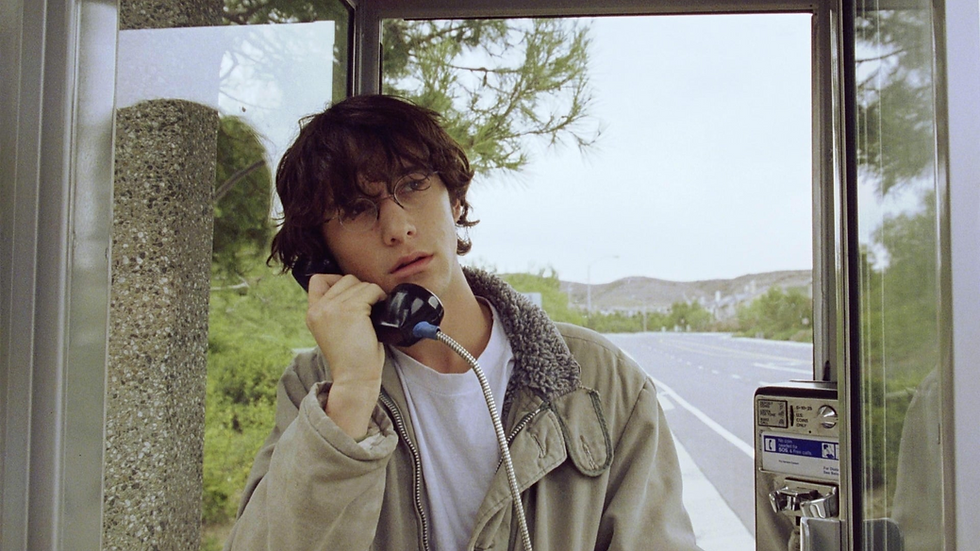
Camera | Editing | Mise-en-scene | Sound |
Dim lighting overall creates the sense of tension | L-cut/R-cut —makes transition between scenes smooth and connected | Dark makeup, suggests evil, sexual, but dangerous | Double entendre phrase said by the girl-creates meaningful expressions of her two purposes |
Shallow depth of focus on a character makes them suspenseful | Dissolve from insert to long shot | Red invitation suggests threats and danger | hight pitched music shows that the girl might be the predator |
Deep focus tells the audience what is going on around the scene. | | Black cool car versus white rusty car, suggesting power and influence over the others | Music suggests cozy atmosphere |
Dirty single and dolly in | | lighting changed from warm to cool | |
Codes and conventions table for the film opening of 'Bird-man'

Camera | Editing | Mise-en-scene | Sound |
-Hand-held shots create a tracking feeling as the story progresses for the audiences. -POV/Over the shoulder shot— improves the audiences engagement to the scene -Two shot -Zoom in | Not a single cut/cut that cannot be noticed creates a flowing and continuous effect for the audience | The props, decorations, and make-ups have been specially designed so that it doesn't looks weird under this no-cut scene. | There is no additional sound effect, and only shows what the actor can actually hear in the situation |
Codes and conventions table for the film opening of 'Dune'

Camera | Editing | Mise-en-scene | Sound |
Establishing shot suggests the story's location | The focus racks between the soldiers showing their emotions clearly | Negative space around the title creates a sense of scale | Music is intensified, and the beat goes faster with the sound of the wind |
the antagonists walks out from the high platform, with close-up shot showing his strength and ambition, and over-the-shoulder shot showing that he is above all the mechs while suggesting his influence and power | The movie's main theme of color-brown and ash gives the audience a decant and broken feeling | Warm lighting inside increases the feeling of calmness, which contracts to the cooler light outside on planet Caladan | Sound of the small flying object moving closer to Paul while music shows calmness, but has sounds of thunder in the background creating mystery |
Long shots on the spaceships are epic, suggesting its strength and signifies it's humongous size. | L-cut/R-cut —makes transition between scenes smooth and connected | The costumes of the protagonists (Paul and his family) are fancy, which shows their title and royalty | dramatic and hallucinate music shows the massiveness of the spaceship |
two-shot with insert shot on glass, creates an image of natural conversation between the two characters | Slow-motion increases the power of movement | The armor of the antagonists are black, which contrasts to the bone-white tone outside | |
Codes and conventions table for the film 'Baby Driver'

Camera | Editing | Mise-en-scene | Sound |
Insert shot on the handbrake, dashboard, and pedals-signifies the movement of the car | Cuts between scenes are very fast, creating an intense feeling and action | The car is red, creates a vibrant and speedy feel for the audience | Fast paced and cheerful up beat music goes well with the car chase scene and also brings in a hint of comedy |
Tracking shot on the car (motion blur on back ground) suggests it's speed is very fast | Transitions between scenes are fluid because the picture often goes toward the place that the actors are looking, so the audience will likely be right about what they expect to see in the next cut | The driver is wearing his headphones and a pair of sunglasses which shows that he is a cool guy | Sounds of the car engine roaring and tires screaming-suggests that the car is in big movements like cutting lane and drifts |


Comments